
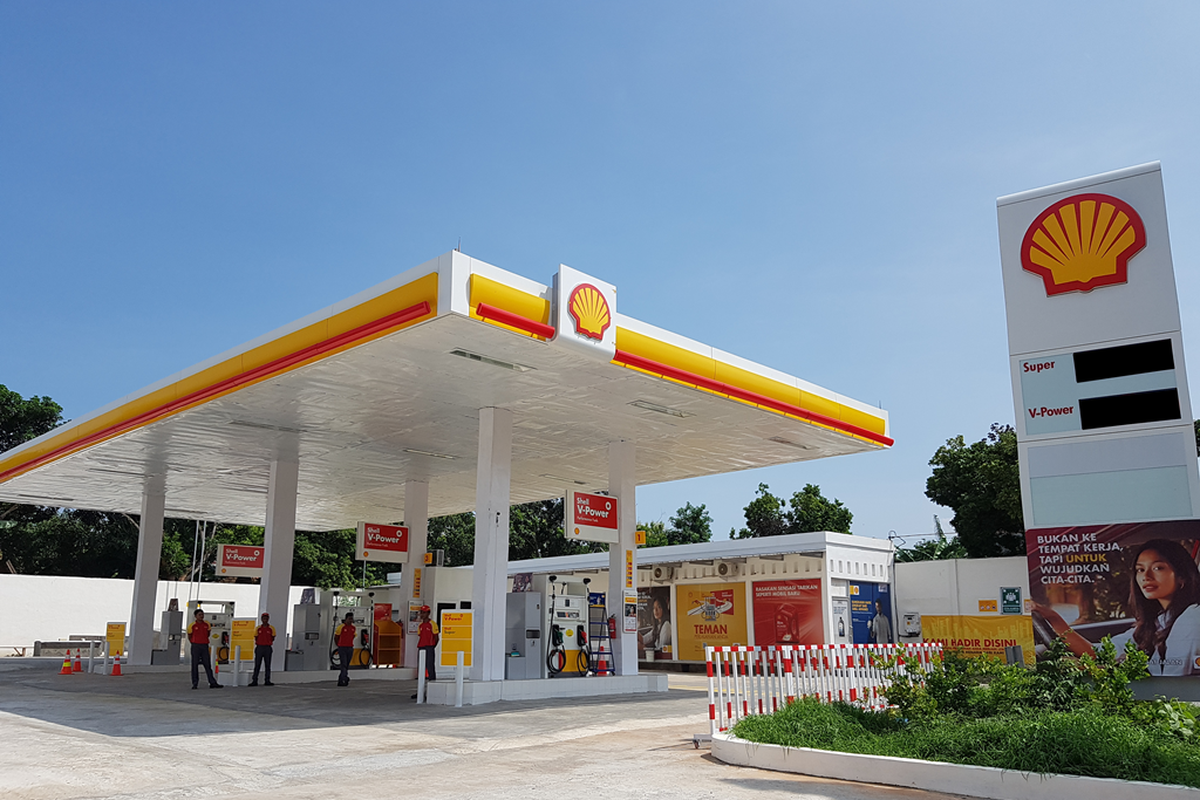
Rayantara.com – Tangerang Selatan, 23 Desember 2025 – Because of new import restrictions, even refueling a vehicle has become a challenge at many Shell stations in Indonesia. For more than a week, several outlets had no gasoline to sell, forcing customers to turn away in frustration.
This shortage is not just about inconvenience but about survival for the workers on site. Staff members who once welcomed drivers are now watching their stations stand idle, uncertain if their jobs will still exist tomorrow. The company admits that when the pumps stay dry, revenue collapses almost instantly. Without income, the staff themselves are the first ones at risk of layoffs. For many, the anxiety is worse than the waiting lines outside the station. Shell management has tried to keep morale up, but the silence of empty pumps has been haunting. A simple task like filling a vehicle has turned into a symbol of broken supply chains. Behind the headlines, there are workers struggling to keep their livelihoods alive.
Import Restrictions and Pressure on Private Fuel Stations
Since August 2025, private fuel stations have struggled with shortages, particularly for non-subsidized gasoline such as RON (Research Octane Number) 92 and 95. The root cause lies in government import restrictions that limit quotas for non-subsidized fuel.
As a result, several private operators, including Shell, have reached their import ceilings. To ease supply pressure, authorities instructed private companies to coordinate imports and distribution with Pertamina, Indonesia’s state-owned energy company.
However, competition watchdogs have warned that these restrictions may reduce consumer choice and potentially encourage monopolistic practices, given Pertamina’s dominant position in the national fuel market.
Government Response: “Not a One-Door Monopoly”
Energy Minister Bahlil Lahadalia emphasized that routing additional fuel imports for private stations through Pertamina should not be interpreted as a one-door monopoly.
Instead, he described the policy as a collaborative arrangement, noting that import quotas have been expanded to 110 percent compared to last year. According to the minister, the decision aims to secure fuel availability while maintaining transparency and fairness between state-owned and private companies.

“Minister Bahlil Lahadalia, during a press briefing on fuel imports and distribution.”
Source: YouTube Live, Kompas TV
A Viral Image That Revealed the Human Impact
Contrary to official reassurances, the impact of the shortage has become deeply personal. A photo shared on Instagram showed employees at a Shell station in Gading Serpong standing hand in hand in a circle on what was described as their final day at work. The image quickly went viral.

“Shell station workers in Gading Serpong gather in a circle during what was described as their final day at work, as the one-door fuel import policy takes effect.”
Source: Ig@/cretivox
For many Indonesians, the image captured the human cost of the one-door import policy. Instead of serving customers, workers were seen comforting one another, uncertain whether their livelihoods would survive the coming months.
Pertamina Truck at a Shell Station Sparks Public Debate
Another viral moment emerged on TikTok, showing a Pertamina fuel truck entering a Shell station. The footage sparked widespread debate, with social media users questioning whether the state-owned company was now supplying its private competitor.

“A Pertamina fuel truck spotted entering a Shell station, sparking debate on social media about state-owned supply for private operators.”
Source: Tiktok@/OtomotifPikiranRakyat
Officials later clarified that the move was part of a government-mandated coordination scheme requiring private operators to source fuel through Pertamina. Nevertheless, the imagery intensified concerns about blurred boundaries between cooperation and monopoly.
Surviving Without Fuel: Creativity on the Forecourt
Beyond viral posts, the shortage has forced some Shell employees to adopt creative survival strategies. With fuel sales halted, several workers have begun selling coffee, snacks, and small souvenirs at station premises to generate income.
What was once a pit stop for vehicles has become a pit stop for people. For customers, purchasing a cup of coffee or a keychain has become an act of solidarity. This phenomenon highlights not only worker resilience but also how economic disruptions compel ordinary people to reinvent their livelihoods in unexpected ways.
Who Bears the Cost of Policy Decisions?
The government is urged to recognize the social consequences of fuel policies and prepare safeguards for workers facing layoffs. The question remains whether policymakers fully account for these human impacts—or whether workers are being treated as inevitable sacrifices of national policy.
The fuel shortage at Shell stations demonstrates how swiftly major regulatory decisions can reshape everyday lives. While the government must ensure fair and open fuel distribution, companies like Shell are also challenged to find ways to support both customers and staff.
The creativity shown by workers selling coffee and souvenirs reflects resilience and hope amid crisis. Still, one critical question lingers: how long can this continue?
Writer: Bimantara, Danu, Johannes, Haikal, Hazmi
Read more: Penerapan Hukum Administrasi Negara dalam Dunia Retail : Menjaga Tertib Usaha dan Kepastian Hukum


